
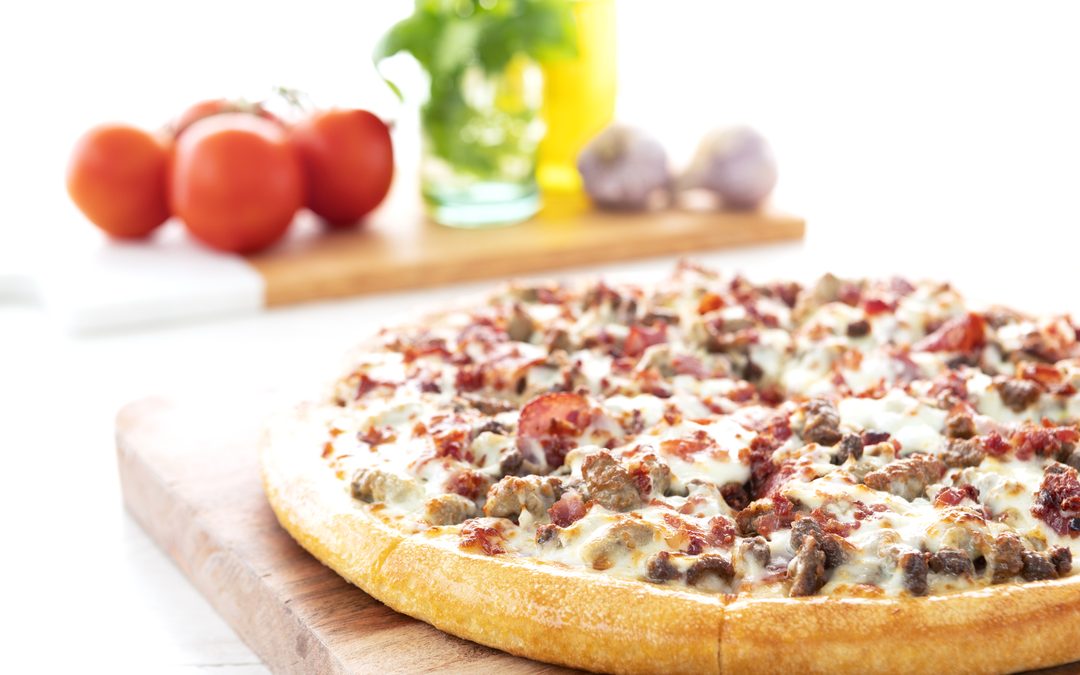
Cheese pulls when mozzarella’s proteins line up into stretchy strands under high heat. Three things determine whether you get that long, satisfying stretch or a greasy slide: the type of mozzarella, how hot the oven runs, and how much moisture sits between the cheese and the crust. Stack too many wet toppings under the cheese and those strands never form properly.
What Makes Cheese Pull When You Lift a Slice?
Cheese pull comes down to casein. That single protein is what makes mozzarella stretch when every other pizza cheese just melts flat. During cheesemaking, mozzarella curds are stretched and folded in hot water, lining casein molecules up into long parallel chains. When a pizza oven heats those chains, the fat between them melts into a lubricant, the proteins loosen, and the whole structure stretches like warm taffy instead of crumbling.
Want maximum stretch? Go with the Mozza-Loaded crust. That stuffed layer packs cheese right to the edge, so the pull runs from the tip of the slice all the way to the crust. Eat it right away. Once mozzarella cools, the fat hardens back up and the protein chains lock in place. Call 210-750-2222 to time your pickup for peak pull.
Temperature is the dividing line. A pizza eaten within the first few minutes out of the oven pulls hard because the casein chains are still loose, the fat between them stays liquid, and the aligned proteins have room to slide and stretch over each other without any resistance at all. Let it sit and the whole system locks up as the fat cools and hardens around those chains. Coverage matters just as much. A pie with thick, edge-to-edge mozzarella gives you an unbroken web on every bite, while thin or patchy cheese snaps at the first gap.
Why Mozzarella Stretches Better Than Other Cheeses
Mozzarella outperforms every other pizza cheese because its protein fibers run in long parallel lines, like rubber bands stacked in the same direction. Cheddar, provolone, and parmesan all form tangled protein networks that snap apart under heat instead of stretching. That structural difference explains why a slice loaded with mozzarella pulls into strings while a cheddar-topped pizza just pools flat.
- Moisture content: Mozzarella retains significantly more water than aged cheeses like cheddar or parmesan. That extra moisture keeps the protein strands flexible and elastic under heat instead of letting them dry out, crack, and crumble into pieces on your plate.
- Fat placement: The fat in mozzarella sits between protein fibers rather than bonding into them. When heat hits, that fat melts into a lubricant that lets strands slide past each other and stretch, which is why you get strings instead of a greasy puddle.
- Minimal aging: Fresh and low-moisture mozzarella skip the months of curing that make cheddar crumbly and parmesan granular. That preserved fiber alignment is exactly why Godfather’s Cheesesticks pull apart so cleanly when you tear one in half.
- Melt range: Cheddar separates into oil and chalky solids. Provolone turns rubbery fast. Mozzarella stays cohesive across a wider temperature window, which means your Mozza-Loaded stuffed crust holds that stretch from the oven to your plate.
How Temperature Affects the Cheese Pull
Temperature decides whether mozzarella stretches or snaps. Straight out of the oven, the cheese is fully liquid and those aligned protein fibers cannot hold their shape at that heat, which is why grabbing a slice too early gets you a droopy mess instead of a clean pull. Give the pizza a minute or two to cool and the proteins tighten just enough to create real elastic resistance when you lift a slice. That cooldown turns a melted puddle into long, clean strands. Wait too long and the cheese locks up. The window between molten and set is narrow.
| Temperature Stage | What Happens to the Cheese | Pull Quality |
|---|---|---|
| Straight from the oven | Fully liquid, proteins too loose to align | No pull, cheese slides off the slice |
| Slightly cooled | Proteins re-firm into elastic strands | Peak stretch, long clean strands |
| Sat too long on the counter | Surface skins over, core thickens | Short pull, strands snap early |
| Room temperature | Cheese solidifies throughout | Breaks apart, no stretch |
| Refrigerated | Fully rigid, fibers locked | Tears in chunks, zero pull |
When you order from Godfather’s, the Mozza-Loaded crust holds heat longer than the other three crust options because of that extra cheese layer sealed around the edge. It buys you a wider pull window. For pickup, plan to eat within a few minutes of getting home. Delivery takes longer, so a quick reheat in a hot oven for a couple of minutes brings the stretch right back without overcooking the toppings. Thin crust cools fastest. Grab those first.
Does Crust Type Change the Way Cheese Stretches?
Crust type does not change the protein structure that makes cheese stretch, but it does change how fast a slice loses heat and how much moisture sits underneath. A thin crust cools quickly, so the cheese firms up and snaps sooner. A thicker crust holds heat longer, keeping the cheese pliable through more bites before it sets.
The biggest misconception about cheese pull is that certain crusts make the cheese stretchier. The mozzarella is the same no matter what base it sits on. What changes is how long the slice stays hot. A thick, doughy crust acts like insulation and keeps the cheese at stretching temperature past your first bite. A cracker-thin crust loses heat fast, and that stretchy window closes quickly. Moisture matters too. Thicker crusts trap steam, which keeps the cheese from drying into a rubbery sheet. The crust is not changing the cheese. It is changing how long the pull lasts.
Godfather’s runs four crust options: Original, Golden, Thin, and Mozza-Loaded. The Original and Golden are the thicker builds, and both hold heat long enough for the cheese to stay in its stretching zone through several bites before it starts to stiffen. Thin crust delivers a crispier bite, but that slice cools fast. Grab it while it is hot if you want any pull. The Mozza-Loaded crust bakes a second cheese layer into the edge, so the stretching starts the moment you lift a slice.
What Kills a Good Cheese Pull?
Excess moisture, heavy toppings, pre-shredded cheese, and the wrong reheat method are the four fastest ways to ruin a pull, and each one attacks the casein fiber network from a different angle. None are obvious at first. By the time you lift the slice and the cheese just sits there, the damage is already done.
- Too much cheese: Piling on extra mozzarella sounds like it should help, but a thick layer seals sauce underneath and prevents liquid from cooking off. The base stays soggy, the cheese slides instead of gripping the crust, and the pull folds over before it gets going.
- Pre-shredded mozzarella: Bagged shredded cheese comes coated in cellulose or cornstarch to prevent clumping. Those anti-caking agents wrap every shred and block the protein fibers from fusing together when heated. The cheese melts but never reconnects into the continuous network a real pull needs.
- Heavy toppings on top: Thick-cut vegetables or stacked meats press the mozzarella flat against the crust and break fiber alignment before the slice even lifts. Placing heavier ingredients under the cheese layer gives the mozzarella room to stretch when pulled.
- Microwaving leftovers: A microwave heats water molecules inside the cheese and floods the proteins with internal steam. They go rubbery, then seize up tight instead of stretching. Reheating in a skillet or a hot oven keeps the cheese in the zone where those fibers can still pull.
Toppings That Help or Hurt the Stretch
Pepperoni, Italian sausage, and bacon all help the stretch because they ride above the melt without releasing water, so the casein fibers stay intact and pull clean off the slice every single time. Fresh tomato slices and raw mushrooms do the opposite, dumping moisture straight into the cheese as they cook and weakening the bonds holding the pull together. Wet toppings are the faster threat.
| Topping | Moisture During Bake | Effect on Pull |
|---|---|---|
| Pepperoni | Low, renders fat instead of water | Helps, cheese stays elastic |
| Italian sausage crumbles | Low, pre-cooked and dry | Helps, no liquid enters the melt |
| Bacon | Very low, already cooked | Helps, adds crunch without steam |
| Fresh tomato slices | High, pools water around each slice | Hurts, softens the cheese layer |
| Raw mushrooms | High, shrink and release liquid | Hurts, moisture floods the melt |
| Bell peppers | Medium-high water content | Can hurt, weakens cheese at contact |
| Onions, sliced thin | Medium, limited release | Minimal effect if cuts stay thin |
Stacking a pizza with all cured meats gives the cleanest pull because nothing on the surface competes with the cheese for heat or dumps water into the melt while it sets. Want vegetables too? Ask for them placed under the cheese so the mozzarella melts directly against itself on top and forms one unbroken sheet. On our Mozza-Loaded crust, that extra layer of cheese underneath the toppings gives the stretch even more material to grab.
Why Thicker Cheese Layers Pull More
A thicker layer of mozzarella puts more aligned casein fibers to work at once. When you pull a slice from a pie loaded with cheese, thousands of protein strands stretch together instead of a thin sheet snapping apart on its own. The difference between a modest sprinkle and a generous layer is the difference between a quick break and a pull that reaches across the table.
- Strand count matters: A thin cheese layer has fewer casein strands bridging the gap between slices, so the pull snaps under its own weight almost immediately. Double the coverage and you double the number of strands sharing the load, which is exactly why extra cheese orders produce longer, stronger pulls than standard builds.
- Heat stays trapped longer: Thicker cheese holds internal temperature because the outer layer insulates the molten center. That buys extra seconds in the stretch zone before the proteins cool and stiffen. A thin layer loses heat to the air fast and goes from stretchy to brittle before the slice clears the box.
- Full coverage eliminates weak points: When cheese blankets the entire surface without bare patches, every slice stays connected to its neighbors through one continuous sheet of melted protein. Gaps or thin spots act like perforations on a sheet of stamps, and the pull snaps at whatever spot has the least cheese.
- Stack the deck when you order: At Godfather’s, adding extra cheese or choosing the Mozza-Loaded crust gives you a thicker starting layer across the whole pie. The stuffed crust adds a second pull point right at the rim where you grip the slice, so you get stretch from both the center and the edge.
How to Get the Best Cheese Pull When You Order
Your order choices set up the cheese pull before the pizza hits the oven. Crust, cheese load, topping placement, and when you pull that first slice all work together. One wrong move kills the stretch. Stack all four in your favor and you get the pull that makes everyone at the table reach for their phone.
- Go with Mozza-Loaded crust: Godfather’s stuffed crust wraps mozzarella into the rim, so when you lift a slice the stretch runs from the center all the way to the outer edge instead of stopping where the topping cheese ends. Original and Golden crusts give you a solid center pull, but stuffed gives you the full stretch.
- Add extra cheese to any pie: A thicker mozzarella layer puts more aligned protein fibers to work when you lift a slice. This single add-on does more for visible stretch than any other change to your order, and it pairs with any crust on the Godfather’s menu.
- Stack dry toppings on top: Pepperoni, sausage, and bacon ride above the melt without releasing water into the cheese. If you want mushrooms or bell peppers, ask for them under the cheese so moisture cooks off against the crust rather than pooling on the stretch layer.
- Wait before you pull: Give the pizza a short rest after it arrives. Straight out of the oven, the cheese is fully liquid and slides off in a pool. That brief cooldown lets the mozzarella firm just enough to catch and stretch when you lift.
Resources Used
Frequently Asked Questions
What is the point of a cheese pull?
A cheese pull is the visual and textural payoff of a well-made pizza. When you lift a slice and the mozzarella stretches into long, elastic strings, it signals that the cheese was fresh, properly melted, and layered at the right thickness. It is not just for show. That stretch means the proteins in the cheese held together under heat instead of breaking down into a greasy, flat layer. A good cheese pull tells you the pizza was built right, from the dough to the cheese to the oven temperature. It separates a solid pizza from a forgettable one.
Why does mozzarella stretch better than other cheeses?
Mozzarella gets its stretch from a process called pasta filata, where the curds are heated and pulled during production. This aligns the casein proteins into long, parallel strands, like the fibers in a rope. When you melt mozzarella on a pizza, those protein strands soften but stay connected, creating elastic strings instead of just pooling into liquid. Aged cheeses like cheddar or parmesan have proteins that have broken down over time, so they melt but do not stretch. Low-moisture mozzarella, the kind used on most pizzas, hits the right balance between moisture content and protein structure for maximum pull.
Does the type of crust affect cheese pull?
Crust plays a bigger role than you might expect. A thicker crust like our Original or Golden holds more heat, which keeps the cheese in that stretchy zone longer after it leaves the oven. Thin crust cools faster, so you get a shorter window for the pull before the cheese firms up. Our Mozza-Loaded stuffed crust adds an extra layer of stretch because there is melted cheese inside the rim and across the top. If your crust holds heat well and supports a solid cheese layer, the pull will be longer and more satisfying.
Should you let pizza cool before pulling the cheese?
Yes, and this is one of the most overlooked tricks. Right out of the oven, the cheese is so hot that it is almost liquid, and it will break apart instead of stretching. Give it a brief rest to cool slightly. The proteins in the mozzarella firm up just enough to hold together in elastic strands rather than snapping. You want the cheese warm and pliable, not screaming hot. Pull your slice at a steady, slow angle rather than yanking it straight up. That patience turns a messy first bite into the kind of stretch you want to photograph.
Can too much cheese ruin the pull?
It sounds backwards, but yes. Piling on extra mozzarella can actually work against you. When there is too much cheese, the layer melts unevenly. The bottom stays undercooked while the top browns. That thick, gooey mass does not stretch cleanly because the proteins never aligned properly under the heat. You also end up with excess moisture from the cheese preventing the crust from crisping. A balanced cheese layer, spread evenly across the sauce, melts uniformly and creates those long, clean strings. More cheese does not mean more pull. It means a heavier, soggier slice that falls apart.
How can I stop cheese from sliding off my pizza?
Give the pizza a couple of minutes to cool after it comes out of the oven before slicing. Hot cheese is still liquid and slides easily, but a short rest lets it firm up so each slice holds together cleanly.
What is the most disliked pizza topping?
Anchovies consistently rank as the most polarizing pizza topping, with pineapple a close second. At Godfather’s Pizza, we stick to toppings people love, building pies like the Classic Combo and All-Meat Combo around flavors that keep San Antonio coming back.
Why does cheese pull on pizza reddit?
Mozzarella’s protein strands align when the cheese is stretched during production, so when heat melts the fat between them, those strands stay connected and create that satisfying pull. The fresher and higher-moisture the mozzarella, the better the stretch you get on a hot slice.