
Tell someone you eat pizza every day and watch their face. There’s a little flinch, like you just admitted to smoking on your lunch break. Then comes the lecture, the grease, the carbs, the cheese, the “everything in moderation” speech from a guy who hasn’t seen his abs since high school.
Yes, you can eat pizza every day and stay lean. Pizza is a format, not a fixed food. One slice of most pizza is about 400 calories; a homemade version with low-fat cheese and lean protein runs roughly 200 calories a slice. The build and the portion decide the outcome, not the pizza itself.
- Portion beats the food itself. Two slices fits almost any healthy day, the trouble is the whole box plus everything else you eat.
- Homemade runs about 200 calories a slice. Skip the oil, use low-fat cheese and lean protein, and it stays light without tasting like a diet.
- Pizza is a format, not a food. Flatbread, sauce, cheese, toppings, what you add and how much you eat decides everything.
- Consistency is the real edge. A pizza you’ll happily eat every day beats a “perfect” meal you quit in a week.
I get it a lot, because I do eat pizza every day. And I sit between 10 and 13% body fat depending on the season. I track my food. I’m in better shape than basically every man my age I know. So when the pizza warning comes, I’ve learned to just smile, because the person delivering it has almost always confused a food with a category, and that confusion is the whole problem.
“Pizza” isn’t a food. It’s a format.
Here’s the thing nobody wants to admit: pizza isn’t unhealthy. A specific pizza might be. The word “pizza” describes a delivery mechanism, a flat base, something saucy, something melty, some toppings. That’s it. What you put in that format decides everything.
The pizza people picture when they wince is a real thing. Thick oily crust, a half-inch blanket of full-fat cheese, greasy meat, a drizzle of oil, the whole thing pushing 400-plus calories a slice before you’ve had your third. Eat that every day and yeah, you’ll have a problem. But that’s not a pizza problem. That’s a build problem. You could make an equally disastrous salad if you tried hard enough with the right dressing and toppings, nobody’s out here warning people off salads.
Once you see pizza as a format instead of a verdict, the entire argument flips. The question stops being “is pizza healthy” and becomes “what did you put on it.” And that’s a question I have a very specific answer to.
My actual build
I’m not going to pretend I eat artisanal anything. My pizza comes together with stuff anyone can grab on one trip:
- Walmart pizza crust
- Pizza sauce
- Low-fat mozzarella
- Onions
- Jalapeños
- Pepperoni
- Chicken
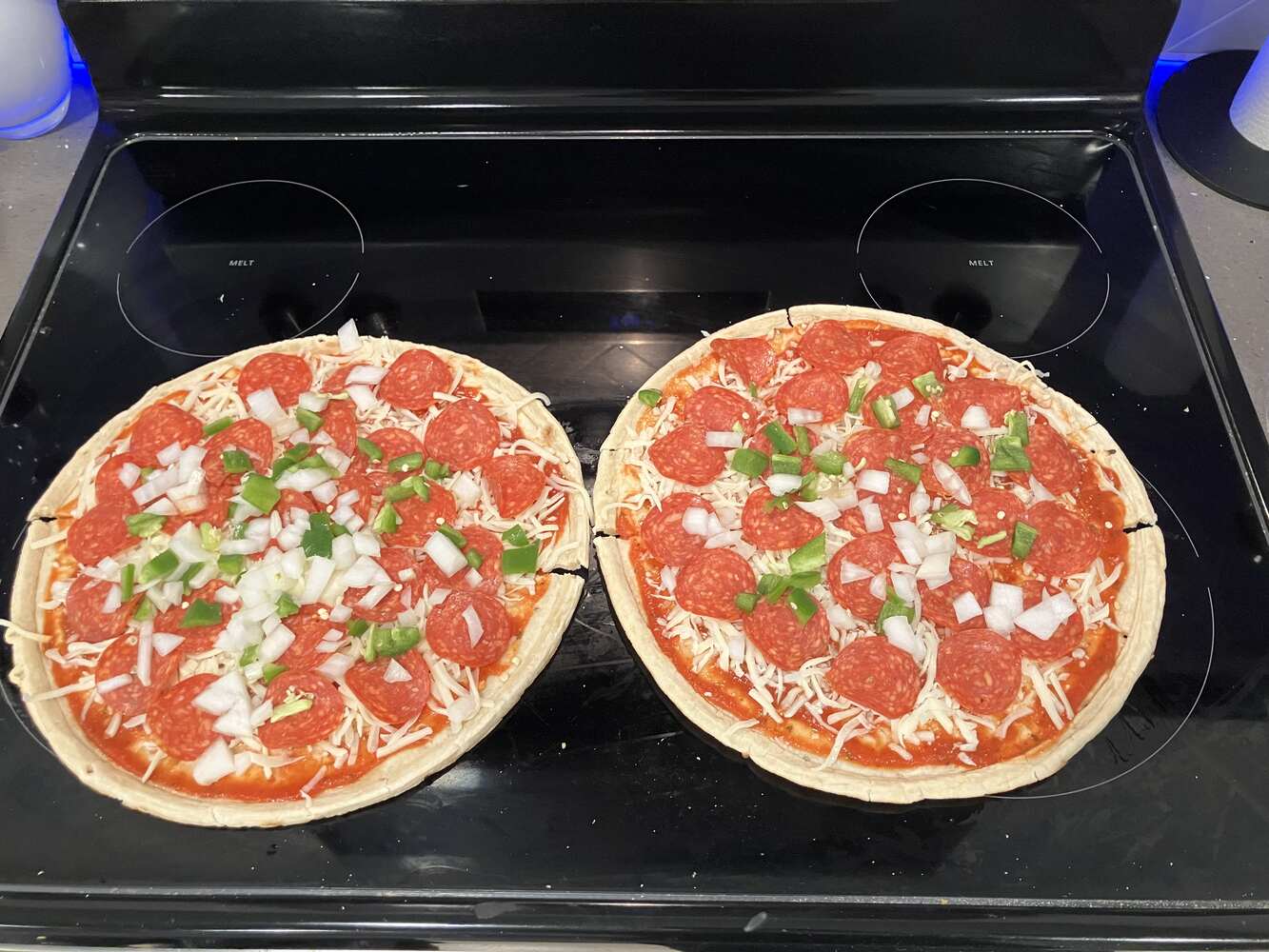
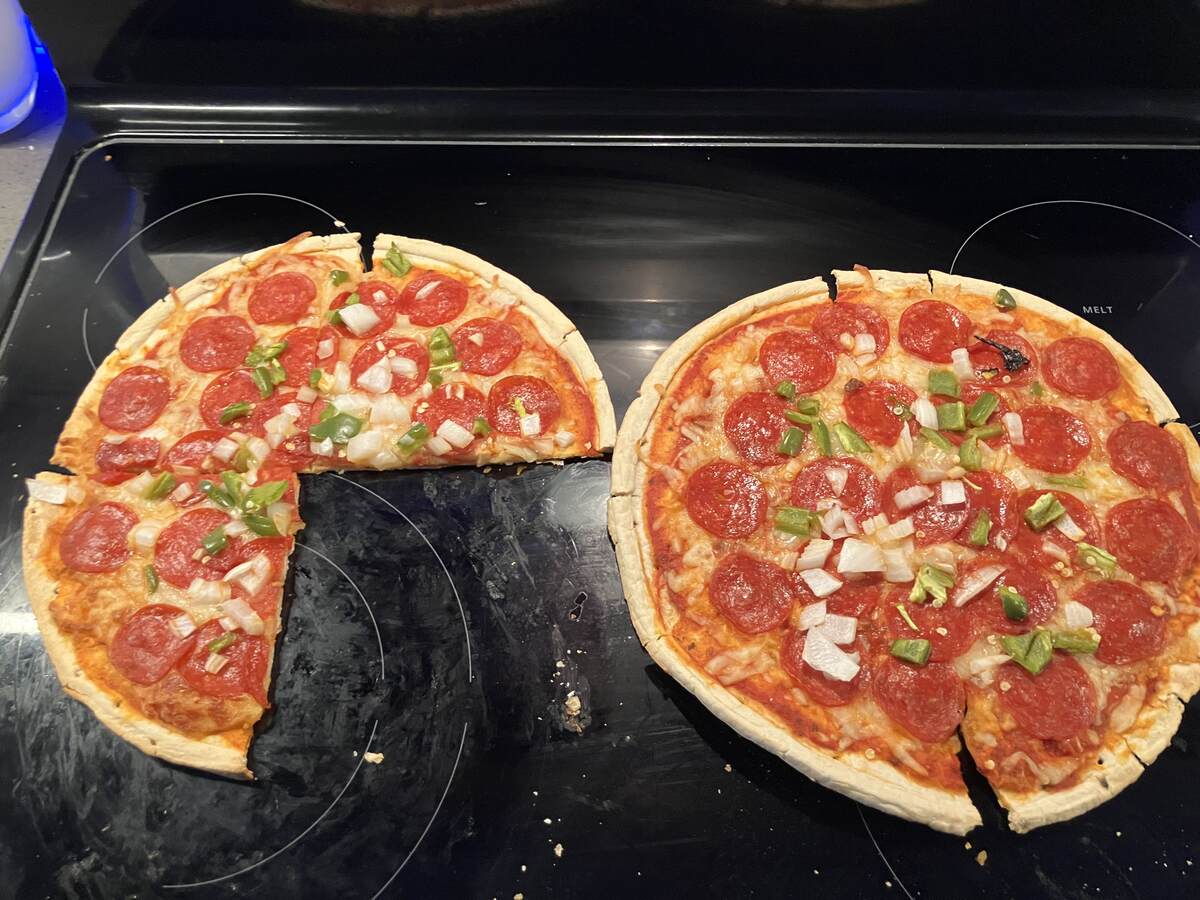
That’s the whole operation. No oil, no butter, no brushing the crust with anything. It comes out to roughly 200 calories a slice at about 10 grams of fat. Compare that to the 350–450 a slice you’re getting from delivery, and the picture changes fast.
What I love about it isn’t just the numbers , it’s that the numbers come for free. I’m not choking down something miserable in the name of discipline. This tastes like pizza because it is pizza. The low-fat mozzarella still melts. The pepperoni still does its job. The chicken loads up the protein so the meal actually keeps me full instead of leaving me raiding the pantry an hour later. The jalapeños and onions are basically free flavor, a few calories, a little fiber, a lot of payoff.
The skill here is so low it’s almost embarrassing, and that’s the point. The healthiest meal in the world doesn’t help you if you won’t make it twice. This one I’ll make forever, because it takes ten minutes and I genuinely look forward to it.
Why it works for literally any goal
This is the part that surprises people most. They assume “pizza guy” means “bulking guy” or “guy who quietly gave up.” But a meal built like this is goal-agnostic, and that’s its best trick.
Cutting? Two slices is 400 calories with a serious slug of protein. That’s a satisfying, real meal that leaves room in your day. Most people fail diets not because they ate one bad thing but because their “diet food” was so joyless they couldn’t sustain it. A diet you actually enjoy is a diet you actually finish.
Maintaining? This is most of my life. Three or four slices anchors my day, I build the rest of my food around it, and I never feel like I’m white-knuckling anything.
Bulking? Add slices. Add chicken. The format scales up as easily as it scales down. You want 1,000 calories of clean-ish surplus? It’s right there, and it’s not a sleeve of cookies.
The same meal serves all three goals because the meal was never the variable. The variable is how much of it you eat and what surrounds it. Once you internalize that, food stops being a list of “good” and “bad” items and becomes a set of tools you portion to fit the job.
The honest caveats, because I’m not selling you anything
If I told you this pizza was a perfect health food I’d be doing the exact thing I just spent 600 words mocking. So here’s the straight version.
The biggest one is sodium. Pizza sauce, pepperoni, and cheese are all salty, and stacked together they add up quick. If you eat this daily like I do, that’s the number worth keeping an eye on. Drink your water, watch your blood pressure if that’s a concern for you, and don’t pretend it’s not there. Pepperoni is also a processed meat, so I lean on the chicken to carry most of the protein and treat the pepperoni more like a flavor topping than the main event.
The second is that “hits your macros” and “complete nutrition” aren’t the same sentence. My pizza is great on protein and calories. It is not a parade of vegetables. Onions and jalapeños are a start, not a finish. So I don’t pretend this one meal is my whole diet. I get fruit, more veg, and other whole foods across the rest of the day. Pizza is the anchor, not the entire ship.
None of that walks back the main point. It sharpens it. A meal can be a smart, repeatable, goal-friendly choice and still be one piece of a bigger picture. Adults can hold both ideas at once.
The actual lesson isn’t about pizza
Strip it all down and this was never really a pizza article. It’s about the difference between eating by reputation and eating by reality.
Most people sort food into “clean” and “dirty” buckets based on vibes, then feel virtuous or guilty accordingly. Meanwhile they’ve got no idea what’s actually in their day. I went the other way. I found a meal I love, I learned exactly what was in it, I built it to fit my goals, and I made it so easy I’ll never get bored enough to quit. That combination (enjoyable, measured, repeatable) beats “technically optimal but you hate it” every time, because the best diet is the one you don’t abandon in three weeks.
So no, I’m not going to apologize for the pizza. I’m in the best shape of anyone handing me nutrition advice at the party, and I got here eating the food they told me to fear. The food was never the problem. The thinking was.
Build it right, count it honestly, and pizza isn’t your cheat meal. It’s just dinner.
- Pizza and PCOS: What to Order Without Wrecking Your Progress
- Pizza as Recovery Food: What to Order After Surgery or Illness
- Can a 2-Year-Old Eat Pizza? The Parent's Guide From a Pizza Shop
- Pizza Bodybuilding: Can You Get Jacked on Slices?
- What Does 400 Calories of Pizza Actually Look Like?
- Is Pizza Actually Bad for Kids? What a Pizza Shop Thinks You Should Know
- Pizza and Heartburn: Which Toppings Make It Worse (and Which Don't)
- Pizza and Diabetes: How to Order Smarter, Not Less
- Can You Eat Pizza While Pregnant? A Pizza Shop Finally Answers
- Frozen vs. Delivery vs. Homemade Pizza: Which Is Actually Lighter?
- What Pepperoni Actually Costs You: 5 Pizza Chains Compared
- How Much Sodium Is in a Loaded Meat Slice? 5 Chains Compared
- Pizza Nutrition, Compared: Calories, Sodium & Protein Across 5 Chains
- Keto Pizza Is Mostly a Scam. Here's What Actually Works.
- Why Pizza Is Better Post-Workout Than You've Been Told
- The Toppings That Turn Pizza Into a High-Protein Meal
- Can You Eat Pizza on a Diet? I Did the Math.