
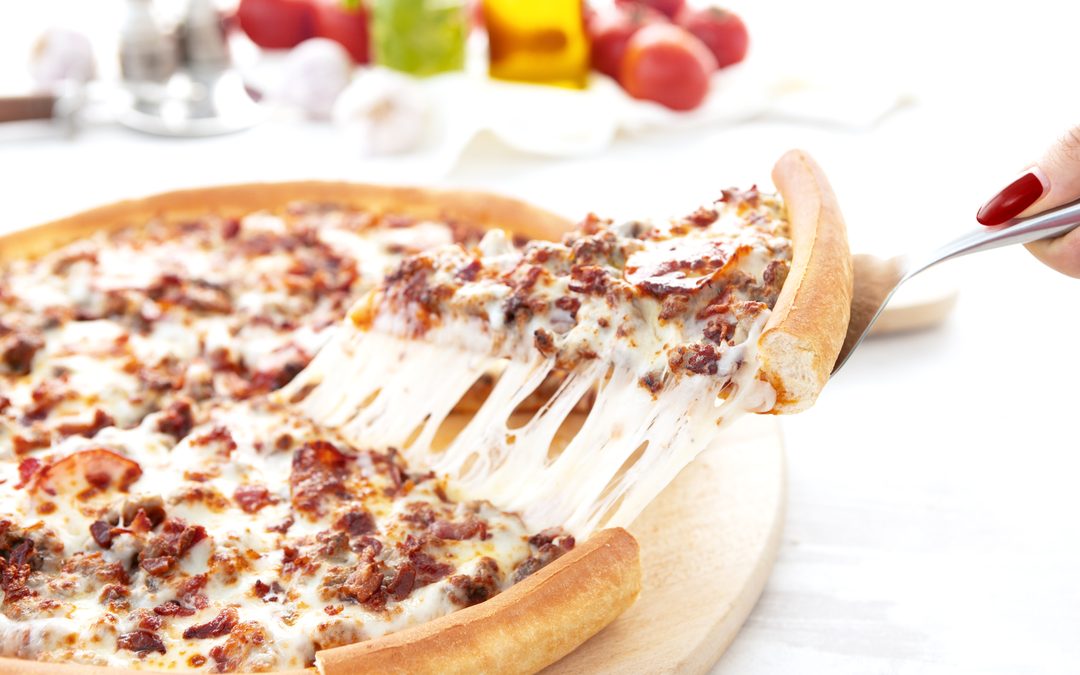
I walked into my gym last week eating a slice of pizza, and the look I got from the guy on the squat rack was worth every calorie. He was drinking a neon-green pre-workout shake that cost more than my entire dinner. I’d just finished a heavy pull session and I was eating my post-workout meal, two slices of homemade pizza with chicken and pepperoni, roughly 400 calories, 28 grams of protein, and 30 grams of carbs. By every measure that actually matters for recovery, that meal was doing exactly what his sixty-dollar tub of powder was doing. It just tasted better and cost about ninety cents.
Pizza works as a post-workout meal because your body needs carbohydrates and protein after training, not a specific product. Two slices of homemade pizza with chicken delivers about 50 grams of protein and 45 grams of carbs. That covers glycogen replenishment and muscle repair better than most protein shakes.
- Post-workout needs are simple: Carbs to replenish glycogen, protein for muscle repair. Pizza has both. The format doesn’t matter, the macros do.
- The anabolic window is hours, not minutes: You don’t need to chug a shake in the parking lot. Eat within a couple hours and you’re covered.
- Three training-day slices beat a shake: 640 calories, 51g protein, 45g carbs, more protein than a shake with a banana, and it’s a real meal.
- Consistency matters more than perfection: A meal you eat every training day without thinking beats an optimal plan you skip half the time.
The idea that you need a specific engineered food after training (a protein shake, a recovery bar, a “post-workout meal” that looks like something from a hospital tray) is one of the most profitable myths in fitness. What your body actually needs after exercise is protein and carbohydrates. Pizza has both. The rest is marketing.
What your body actually needs after training
Let’s strip this down to the physiology, because the supplement industry has buried the basics under so many layers of product placement that most people couldn’t tell you what post-workout nutrition actually does.
When you lift weights or do intense cardio, two things happen that nutrition needs to address. First, you deplete glycogen, the stored carbohydrate in your muscles that fuels high-intensity work. Second, you create micro-damage in muscle fibers that your body repairs and rebuilds, which is how muscle grows. Replenishing glycogen requires carbohydrates. Repairing muscle requires protein, specifically the amino acids that protein breaks down into.
That’s it. Carbs and protein. Not a specific brand. Not a specific supplement. Not a specific timing window down to the minute. Carbohydrates and protein, consumed in reasonable amounts within a few hours of training. Every credible sports nutrition resource (not the ones selling you something, the actual research) says the same thing.
A slice of homemade pizza with chicken on it contains both. The crust provides carbs. The chicken provides protein. The cheese provides a little of both plus some fat for satiety. It’s a complete post-workout meal by the actual definition of what that means. The only reason it doesn’t seem like one is that nobody’s selling it in a shaker bottle.
The “anabolic window” is real but massively overhyped
You’ve heard this one: you have 30 minutes after your workout to get protein in or your gains disappear. It’s the reason guys sprint to the locker room to chug a shake before their heart rate comes down. And it’s mostly nonsense.
There is a period after exercise when your muscles are more receptive to nutrients. That’s real. But the “window” is not 30 minutes. It’s more like several hours, and the urgency depends heavily on what you ate before training. If you had a meal with protein and carbs an hour or two before your workout, your body is already digesting and delivering those nutrients. The post-workout meal becomes less urgent because your pre-workout meal is still doing its job.
If you trained fasted (early morning, empty stomach) then yes, eating sooner rather than later makes more sense. But even then, “sooner” means within an hour or two, not within some magical 30-minute countdown that gym culture invented to sell more supplements.
The practical implication is freeing: you don’t need to inhale a protein shake in the parking lot. You can drive home, make your pizza, eat like a human being, and your muscles will be fine. Total daily protein intake matters far more than meal timing. If you’re hitting your protein target across the day, the exact minute you eat after training is almost irrelevant to your results.
My post-workout pizza, specifically
I train in the evening, usually finishing around 6:30 or 7. I come home, and my pizza takes about ten minutes from fridge to plate. Here’s the build I use on training days:
- Walmart pizza crust
- Pizza sauce
- Low-fat mozzarella (2 oz)
- Pre-cooked chicken breast (4 oz. I bump this up on training days)
- Turkey pepperoni
- Jalapeños, onions
Whole pizza: roughly 850 calories, 68 grams of protein, about 60 grams of carbs. I eat three slices after training and save the rest. That’s about 640 calories, 51 grams of protein, and 45 grams of carbs in my post-workout meal. For reference, a standard whey protein shake with a banana , the “correct” post-workout meal according to gym culture, gives you about 300 calories, 30 grams of protein, and 27 grams of carbs. My pizza beats it on protein by 70%, matches it on carbs, and actually constitutes a meal instead of a liquid that leaves you hungry an hour later.
The ten-minute window is key. I’m not spending 30 minutes cooking after training when I’m tired and hungry. The pizza is assembled in two minutes, bakes for eight. I shower while it’s in the oven. By the time I’m dressed, dinner’s ready. If post-workout nutrition were any more complicated than this, I wouldn’t do it consistently. And consistency is the only thing that matters.
Why gym culture resists this idea
There’s a reason the squat-rack guy looked at me sideways, and it’s not because he’d done the nutritional analysis and found my pizza lacking. It’s because gym culture has built an identity around the idea that training requires sacrifice, sacrifice of comfort, sacrifice of pleasure, sacrifice of normal food. Eating pizza after a workout violates the aesthetic of suffering that a lot of gym people confuse with discipline.
The protein shake isn’t just a nutritional choice for these guys. It’s a signal. It says “I take this seriously.” The chicken-and-rice meal prep isn’t just fuel. It’s a badge. And pizza (regular, delicious, normal pizza) threatens that identity because it suggests you can get results without performing the rituals.
I have nothing against protein shakes. They’re convenient, they work, and if you prefer them, drink up. What I have a problem with is the implication that they’re necessary, or that choosing real food over a supplement is somehow less committed. The commitment is in showing up to train and eating enough protein. How that protein arrives in your stomach is a matter of preference, not principle.
The caveats, because recovery is more than one meal
I want to be clear about the limits of what I’m arguing.
Pizza is a good post-workout meal if you build it right. A loaded pizza with double cheese and sausage is 400 calories a slice and skewed heavily toward fat, which digests slowly and delays the protein and carb delivery your muscles are looking for. The build matters. It always matters. If you’re going to use pizza as recovery food, build it like a recovery meal, high protein, moderate carbs, controlled fat.
This also doesn’t apply to every type of training equally. If you’re an endurance athlete who just ran 18 miles, your glycogen demands are different from mine after a 45-minute lifting session. Endurance work burns through significantly more glycogen, and the carb-replenishment urgency is higher. My pizza still works for that , the crust has plenty of carbs, but the amount might need to scale up. One size does not fit all athletes, and I’m not pretending my lifting-day build is universal.
And sleep, hydration, and total daily nutrition matter more than any single meal. If you eat perfect post-workout pizza but sleep five hours and drink no water, the pizza isn’t going to save you. Recovery is a system, not a meal. The pizza is one input into that system.
The protein shake is optional. The consistency isn’t.
Here’s what actually drives results after years of training: doing the basic things right, repeatedly, without drama. Train hard. Eat enough protein across the day. Get enough sleep. Stay hydrated. Do this for months and years, not days and weeks.
What you eat immediately after your workout is one of the least impactful variables in that equation. It matters. It’s not nothing. But it’s so far down the priority list compared to total daily intake, sleep quality, and training consistency that obsessing over it is a misallocation of mental energy. The guy agonizing over whether to drink his shake within 28 or 32 minutes of his last set would get better results by going to bed an hour earlier.
I eat pizza after training because it’s fast, it’s cheap, it hits my macros, and I enjoy it enough to do it every single training day without exception. That reliability is the actual edge. Not the food itself, the fact that I never have to think about what to eat, never have to negotiate with myself, never skip a meal because the “right” food wasn’t available. The pizza is always available. The results followed.
Eat the pizza. Skip the guilt. Train again tomorrow.
- Pizza Bodybuilding: Can You Get Jacked on Slices?
- Can a 2-Year-Old Eat Pizza? The Parent's Guide From a Pizza Shop
- What Does 400 Calories of Pizza Actually Look Like?
- Is Pizza Actually Bad for Kids? What a Pizza Shop Thinks You Should Know
- Pizza and Heartburn: Which Toppings Make It Worse (and Which Don't)
- Pizza and Diabetes: How to Order Smarter, Not Less
- Can You Eat Pizza While Pregnant? A Pizza Shop Finally Answers
- Frozen vs. Delivery vs. Homemade Pizza: Which Is Actually Lighter?
- What Pepperoni Actually Costs You: 5 Pizza Chains Compared
- How Much Sodium Is in a Loaded Meat Slice? 5 Chains Compared
- Pizza Nutrition, Compared: Calories, Sodium & Protein Across 5 Chains
- Keto Pizza Is Mostly a Scam. Here's What Actually Works.
- Can You Eat Pizza on a Diet? I Did the Math.
- The Toppings That Turn Pizza Into a High-Protein Meal
- I Eat Pizza Every Single Day. I’m Also Leaner Than Almost Everyone Telling Me Not To.