
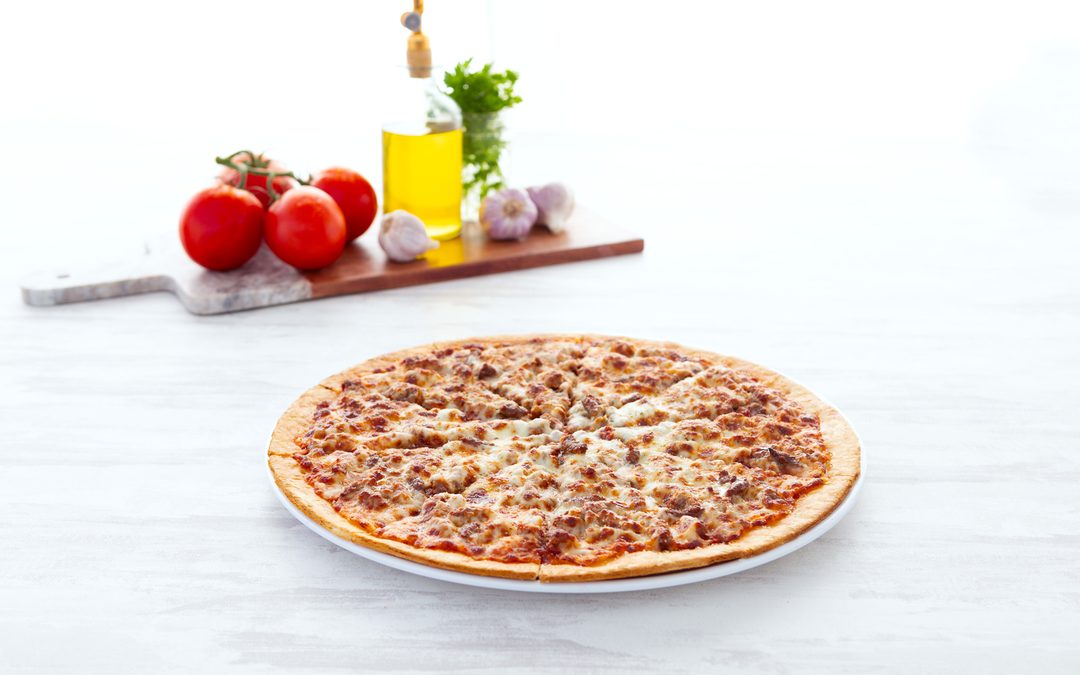
My pizza has more protein than most people’s “protein meals.” That’s not a brag. It’s a math problem that almost nobody bothers to solve because they’ve already filed pizza under “cheat food” and moved on. Two slices of what I build at home gives me 28 grams of protein. That’s more than a Greek yogurt, more than most protein bars, and about the same as a chicken breast the size of a deck of cards. The difference is I actually want to eat mine.
Chicken is the best high-protein pizza topping, 3 ounces adds 26 grams of protein at 140 calories. Combined with low-fat mozzarella and turkey pepperoni, a homemade pizza hits 56-68 grams of protein per pie. That beats most dedicated “protein meals” while actually tasting like dinner.
- Chicken carries the protein load: 26 grams per 3 oz, lean enough not to change the fat profile. Batch-cook on Sunday, add cold, ten seconds of effort.
- Turkey pepperoni flips the fat-to-protein ratio: 9 grams of protein and 4 grams of fat per serving versus regular pepperoni’s opposite.
- Eggs on pizza are underrated: Crack one on top 3 minutes before it comes out. Runny yolk acts like a sauce. 6 grams of protein.
- Skip the protein powder in dough: Gummy texture, sweet taste that fights sauce. Just add chicken. It’s simpler and better.
The reason pizza is low-protein by default is that the default pizza is a cheese delivery system with some bread underneath. Mozzarella has protein , about 7 grams per ounce, but by the time you factor in the crust and sauce, a typical cheese slice gives you maybe 10 to 12 grams. That’s a snack, not a meal. The fix is so obvious it’s almost annoying: put protein-dense toppings on the pizza. The format was always capable of being high-protein. People just weren’t building it that way.
Chicken is the answer to most protein questions on pizza
I put chicken on my pizza almost every single time, and the reason is simple: nothing else gives you as much protein per calorie with as little interference to the rest of the pizza. Three ounces of cooked chicken breast , which is about what fits comfortably across a personal-sized pizza, adds 26 grams of protein and 140 calories. It’s lean enough that it doesn’t change the fat profile of the pizza meaningfully, mild enough that it doesn’t fight the other toppings, and it shreds or cubes in a way that distributes evenly across slices.
I use pre-cooked chicken. I’m not grilling a chicken breast every time I make pizza. I batch-cook on Sunday, cube it, and keep it in the fridge. It goes on cold and heats through in the oven. Total added effort: ten seconds of opening a container and sprinkling. If that sounds lazy, good. The laziness is what makes it sustainable. I’ve been doing this for years specifically because it requires almost no additional work.
Season the chicken however you want. Italian seasoning is the obvious play. Smoked paprika and garlic powder gives it a slightly deeper flavor. I’ve used taco seasoning when I was making a southwest-style pizza, and it worked better than it had any right to. The chicken is a vehicle. What you put on it before it goes on the pizza is where you make it yours.
The supporting cast, ranked by usefulness
Chicken does the heavy lifting, but there are other toppings worth considering if you’re building specifically for protein.
Turkey pepperoni is my go-to for flavor protein. Regular pepperoni has more fat than protein per serving, which is fine in small amounts but adds up fast if you’re using it as a primary protein source. Turkey pepperoni flips that ratio, about 70 calories per serving with 9 grams of protein and 4 grams of fat. It crisps up the same way, gives you that pepperoni hit, and doesn’t turn your pizza into an oil slick. I use it alongside chicken, not instead of. Chicken for volume protein, turkey pepperoni for flavor.
Eggs are underrated on pizza and I will die on this hill. Crack an egg directly onto the pizza about three minutes before it comes out of the oven. You get a runny yolk that acts like a sauce when you cut into it, plus 6 grams of protein per egg. A pizza with chicken, an egg, some arugula thrown on after baking, and a little parmesan is legitimately one of the best meals I make. It feels fancy. It takes the same ten minutes.
Ricotta dollops work well if you’re after a white-pizza situation. A quarter cup of part-skim ricotta adds about 7 grams of protein and 85 calories. Drop it in small spoonfuls across the pizza before baking, and it creates these creamy pockets that contrast with the melted mozzarella. Pair it with spinach, garlic, and chicken for a pizza that looks like it came from a restaurant and tastes better because you didn’t pay eighteen dollars for it.
Cottage cheese as a base sounds weird until you try it. Blend it smooth and use it under or alongside the sauce. It adds protein without changing the flavor profile much, it melts into the pizza and you’d never know it was there. I’ve done this when I really needed to push my protein numbers up, and the result is surprisingly neutral. About 13 grams of protein per half cup, 90 calories. Not my everyday move, but a legitimate tool.
Canadian bacon or ham is leaner than regular bacon or sausage and adds about 5 grams of protein per ounce. It’s a fine addition but not a game-changer. I use it when I want variety more than when I’m chasing macros.
Three builds I actually make, with approximate numbers
These are real pizzas I eat, not theoretical ones. All are personal-sized, about 10 inches, and I’m listing the whole-pizza macros so you can divide by however many slices you cut.
The daily driver: Walmart crust, pizza sauce, low-fat mozzarella (2 oz), chicken (3 oz), turkey pepperoni (1 serving), jalapeños, onions. Whole pizza: roughly 800 calories, 56 grams protein, 40 grams fat, 60 grams carbs. Cut into four slices, that’s 200 calories and 14 grams protein per slice. This is what I eat most days.
The protein push: Same crust and sauce, low-fat mozzarella (2 oz), chicken (4 oz), one egg cracked on top, spinach. Whole pizza: roughly 850 calories, 68 grams protein, 35 grams fat, 55 grams carbs. This is my training-day pizza when I want to hit higher protein without adding more meals. The egg makes it.
The white pie: Crust brushed with garlic and olive oil (minimal), ricotta dollops (1/4 cup), low-fat mozzarella (1.5 oz), chicken (3 oz), baby spinach wilted on top, red pepper flakes. Whole pizza: roughly 780 calories, 58 grams protein, 32 grams fat, 50 grams carbs. This is the one that people are most surprised by when I serve it, because it doesn’t look or taste like a “protein meal.” It looks like something from a brick-oven place.
What doesn’t work, and I’ll save you the experiment
Protein powder mixed into pizza dough. I’ve tried it. The texture turns gummy, the taste is sweet in a way that fights tomato sauce, and you’re adding 30 grams of protein to a food that already had protein available through easier means. The internet is full of protein-powder-pizza recipes. They are, almost without exception, worse than just adding chicken.
Tofu on pizza is another one I’ve attempted. It doesn’t melt, it doesn’t crisp, it doesn’t absorb flavor the way it does in a stir-fry because the pizza oven time is too short. You end up with bland white cubes sitting on top of an otherwise good pizza. If you’re plant-based, I understand the appeal. But I’d go with seasoned and pan-crisped tofu laid on after baking rather than during, or just load up on the ricotta and cheese approach and accept slightly lower protein from the toppings.
Excessive cheese in the name of protein. Yes, mozzarella has protein. But adding more cheese to increase protein also adds a proportional amount of fat and calories. An extra ounce of whole-milk mozzarella is 7 grams of protein but also 85 calories and 6 grams of fat. Chicken gives you 9 grams of protein per ounce at 47 calories and 1 gram of fat. The math isn’t close. Use cheese for flavor, not for protein.
The real skill is building a meal, not assembling ingredients
The fitness world treats protein like a scavenger hunt, how many grams can you cram into a single food? Protein bars, protein pancakes, protein ice cream, protein water. The obsession with individual-food protein counts misses the actual skill, which is building a meal that hits your target while tasting good enough to eat every day.
Pizza does that better than almost anything I’ve found, because the format is infinitely flexible. It holds any protein you put on it. It provides carbs from the crust, which you need for energy. The cheese gives you some fat for satiety. And the toppings provide volume and flavor that make it feel complete.
I don’t eat high-protein pizza because I’m hacking the system. I eat it because after years of trying to find a daily meal that’s fast, cheap, high-protein, genuinely satisfying, and not boring by day thirty, pizza won. Everything else I tried either cost too much, took too long, or tasted too grim to sustain. The best high-protein meal is the one you’ll eat tomorrow, and next week, and next month. For me, it’s pizza. The toppings just made the math work.
- Pizza Bodybuilding: Can You Get Jacked on Slices?
- Can a 2-Year-Old Eat Pizza? The Parent's Guide From a Pizza Shop
- What Does 400 Calories of Pizza Actually Look Like?
- Is Pizza Actually Bad for Kids? What a Pizza Shop Thinks You Should Know
- Pizza and Heartburn: Which Toppings Make It Worse (and Which Don't)
- Pizza and Diabetes: How to Order Smarter, Not Less
- Can You Eat Pizza While Pregnant? A Pizza Shop Finally Answers
- Frozen vs. Delivery vs. Homemade Pizza: Which Is Actually Lighter?
- What Pepperoni Actually Costs You: 5 Pizza Chains Compared
- How Much Sodium Is in a Loaded Meat Slice? 5 Chains Compared
- Pizza Nutrition, Compared: Calories, Sodium & Protein Across 5 Chains
- Keto Pizza Is Mostly a Scam. Here's What Actually Works.
- Can You Eat Pizza on a Diet? I Did the Math.
- Why Pizza Is Better Post-Workout Than You've Been Told
- I Eat Pizza Every Single Day. I’m Also Leaner Than Almost Everyone Telling Me Not To.